In the modern manufacturing landscape, aluminum alloys have become the material of choice for engineers and procurement specialists across the globe. Whether you are sourcing for the automotive, aerospace, electronics, or construction industries, understanding what components are typically made from aluminum alloys is the first step toward making informed purchasing decisions.
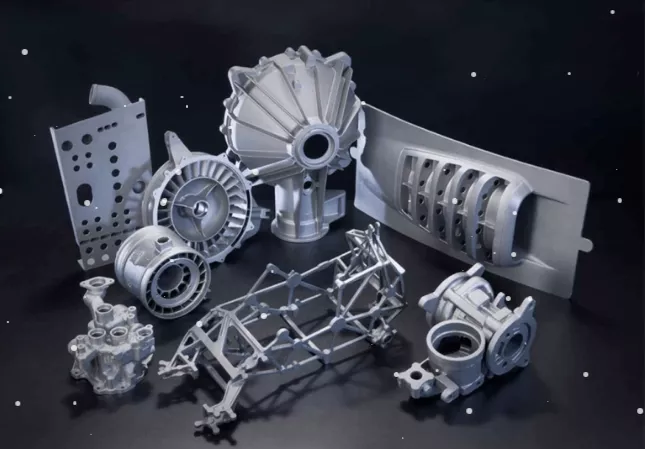
For buyers, knowing not just what is made, but why aluminum is used and how these parts are manufactured, is critical to sourcing reliable, cost-effective components. This guide breaks down the most common aluminum alloy components by industry, helping you align your sourcing strategy with technical requirements.
Why Aluminum? The Core Properties That Drive Selection
Before diving into specific parts, it is essential to understand why aluminum alloy metal dominates so many industries. Unlike steel or plastic, aluminum offers a unique combination of properties that are difficult to replicate .
Lightweight: With a density of approximately 2.7 g/cm³, aluminum is about one-third the weight of steel. This is the primary driver for its use in transportation and aerospace .
High Strength-to-Weight Ratio: Through alloying (with elements like Silicon, Magnesium, and Copper) and heat treatment (such as T6 temper), aluminum can achieve strength comparable to mild steel .
Natural Corrosion Resistance: Aluminum forms a protective oxide layer, making it ideal for components exposed to weather or marine environments .
Thermal & Electrical Conductivity: It dissipates heat effectively and conducts electricity well, which is vital for electronics and heat exchangers .
Recyclability: Aluminum is 100% recyclable without losing its properties, requiring only 5% of the energy needed for primary production .
Common Aluminum Components Across Key Industries
International buyers typically search for components based on their end-use sector. Here is a breakdown of the most common aluminum die casting applications and fabricated parts.
1. Automotive and Transportation (The Largest Market)
The transportation sector is the dominant consumer of aluminum die cast parts, driven by the need for lightweighting to improve fuel efficiency and EV range .
Engine & Powertrain: Cylinder blocks, cylinder heads, pistons, intake manifolds, and oil pans. Alloys like A356 and 319 are common here for their pressure tightness and heat resistance .
Transmission Components: Transmission housings, clutch housings, and valve bodies. These require aluminum die cast assemblies that offer dimensional stability .
Structural & Chassis: Shock absorber brackets, suspension arms, subframes, and crossmembers. High-strength alloys like 6061 and 7075 are often used .
Electric Vehicle (EV) Specifics: Battery housings, motor frames, and inverter enclosures. The thermal management properties of aluminum are critical here to dissipate heat from batteries .
Wheels: Aluminum alloy wheels (often A356 or 6061) are standard for reducing unsprung weight and improving handling .
2. Aerospace and Defense
This sector requires the highest strength-to-weight ratios and reliability.
Airframe Structures: Wing spars, ribs, fuselage frames, and bulkheads. These often use 7000-series alloys (like 7075) for maximum strength .
Fittings and Fasteners: Seat tracks, brackets, hydraulic manifolds, and landing gear components .
Compressor Wheels: Used in aircraft air conditioning and engine systems, often made from forged 2618 aluminum for high-temperature strength .
3. Electronics and Telecommunications
As devices get smaller and networks get faster (5G), aluminum’s thermal and shielding properties become vital.
Housings and Enclosures: Smartphone bodies, laptop chassis, and tablet frames. Special alloys like AD3 are designed for thin-wall casting and a premium look .
Heat Sinks: Critical for LEDs, CPUs, and power transistors. The 1000 and 6000 series alloys are preferred for their thermal conductivity .
5G Infrastructure: Outdoor sockets, receiver housings, and antenna mounts that must withstand weather while dissipating heat .
4. Industrial Machinery
Hydraulic Components: Valve bodies, pump housings, and manifolds where pressure tightness is required .
Robotics Parts: End-of-arm tooling, arms, and links where low inertia allows for faster movement .
Gearboxes and Motor Housings: Protecting internal gears while dissipating operational heat .
5. Building and Construction
Architectural Hardware: Door handles, window frames, curtain walls, and railings. 6063 alloy is the standard for extrusions due to its excellent surface finish .
Structural Support: Roof trusses, ladders, and scaffolding planks where lightweight and strength are needed on-site.
6. Marine Applications
Hull Components and Fittings: Due to excellent seawater corrosion resistance, alloys like 5052 and 5083 are used for shipbuilding, propeller blades, and underwater fittings .
7. Consumer Goods
Cookware and Utensils: 3003 alloy is popular for pots and pans due to its formability and corrosion resistance .
Sports Equipment: Bicycle frames (often 6061 or 7005 alloy), baseball bats, and scuba tanks .
Understanding the “Big Three” Alloy Series for Buyers
When sourcing, you will frequently encounter these three families. Knowing the difference helps you ask the right questions.
Aluminum-Silicon (3xx.x series, e.g., A380, ADC12): Dominant in aluminum die casting. Silicon improves fluidity, allowing for complex, thin-walled parts. This is what you typically see in zinc die casting competitors, but aluminum offers better strength-to-weight .
Aluminum-Magnesium (5xxx series, e.g., 5052): Excellent corrosion resistance and weldability. Often used in sheet metal work, marine parts, and automotive body panels .
Aluminum-Magnesium-Silicon (6xxx series, e.g., 6061): The “workhorse” alloy. It is heat-treatable, strong, corrosion-resistant, and widely available in extrusions and plate. Used for structural frames, pipes, and CNC-machined parts .
How to Source These Components: A Buyer’s Checklist
Finding the right aluminum die casting suppliers or aluminum die casting factories requires more than just a price comparison. Here is a checklist to ensure quality :
Verify Alloy Certification: Demand Mill Test Certificates (MTCs) that verify the chemical composition and temper (e.g., 6061-T6). Reputable suppliers will provide this documentation .
Assess Manufacturing Capabilities:
For Castings: Can they perform High-Pressure Die Casting (HPDC) for thin walls, or Low-Pressure/Gravity casting for pressure-tight parts?
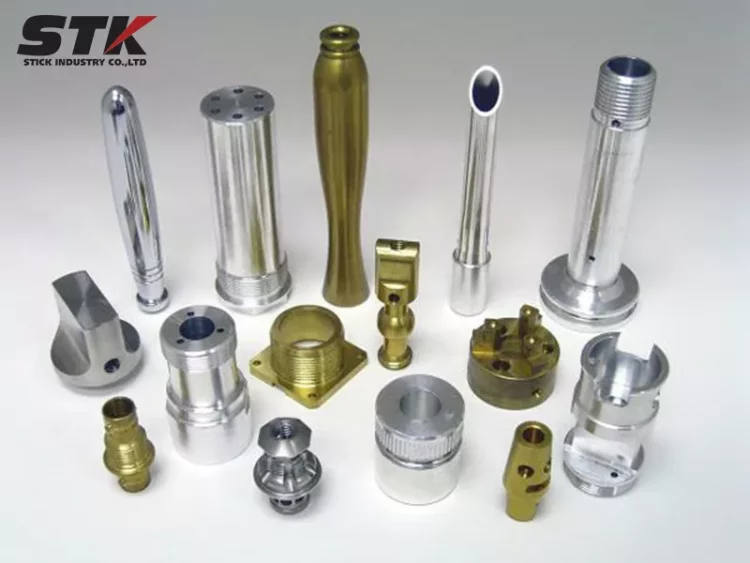
For Finishing: Do they offer in-house anodizing, powder coating, or CNC machining? This reduces lead times and liability .
Look for Industry Certifications: ISO 9001 is a baseline. For aerospace, look for AS9100. For automotive, IATF 16949 .
Evaluate Quality Control: Do they use X-ray inspection for porosity? Do they have CMM (Coordinate Measuring Machine) for dimensional accuracy? For critical aluminum die cast components, this is non-negotiable .
Conclusion
From the engine block in your car to the smartphone in your pocket, aluminum alloy parts are the invisible backbone of modern technology. For the B2B buyer, understanding the specific applications—whether it is a high-strength 7075 aluminum bracket for aerospace or a corrosion-resistant 5052 housing for marine electronics—is the key to successful sourcing.
By partnering with a zinc die cast company that also specializes in aluminum (or a dedicated aluminum foundry), you can leverage the unique properties of this versatile metal to enhance your product’s performance and durability.
Are you looking for reliable suppliers for your next project? Contact our team STICK INDUSTRY today to discuss your specifications for aluminum die castings or machined components.